
What Is Your Brand Actually Worth? Because Your Visual Assets Are Revealing Everything. To Everyone.
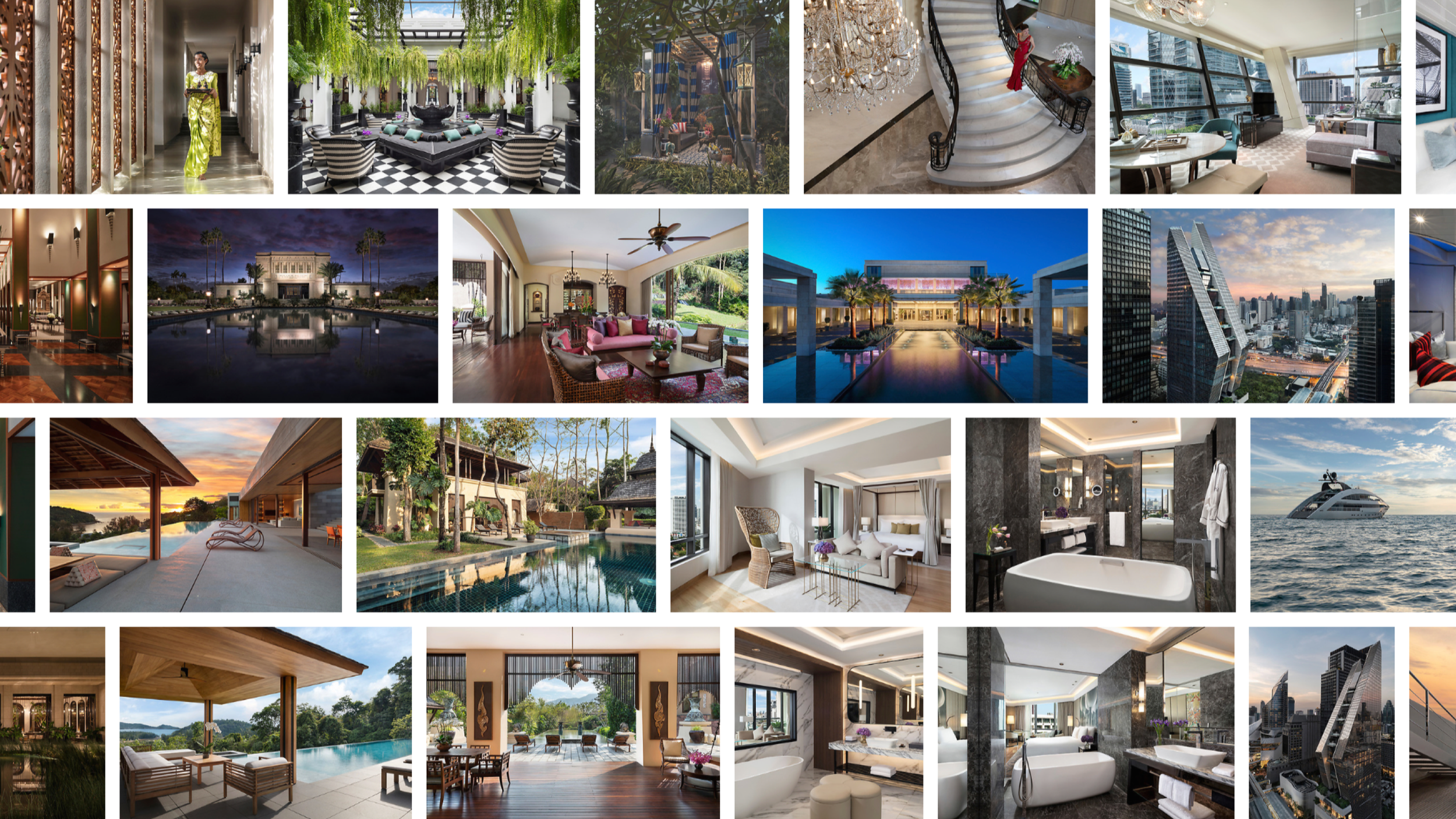
A brand’s visual assets are not a reflection of its photography budget. They are a reflection of how seriously the brand takes itself. Every image on a hotel’s website, OTA listing, sales deck, and press kit is communicating something to every potential guest, investor, and media contact who encounters it. The question is whether what it is communicating is intentional.
The Three Tiers Nobody Wants to Admit Exist
The market for visual content in luxury hospitality operates across three tiers, and the outcomes are not comparable. Not marginally different. Not close enough to justify a budget decision. Fundamentally, structurally, commercially incomparable.
The first tier is a professional studio with genuine campaign experience — not editorial experience, not portrait experience, but the specific understanding that comes from working directly alongside brand strategists, creative directors, and advertising agencies in the development of a complete visual identity from the ground up. The second tier is a photographer with the right equipment and the intention to use it well, but without the commercial framework to understand what well actually means in a brand context. The third is an influencer, whose expertise begins and ends with their own audience and their own personal brand.
These are not three versions of the same product at different investment levels. They are three different transactions producing three different outcomes, and the brand that treats them as interchangeable has already communicated what it believes its visual identity is worth.
What You Commission When You Commission Experience
A studio that works at this level does not arrive on set with a shot list. It arrives with a narrative strategy developed in collaboration with the brand team, the marketing director, and the agency — built before a single frame is made. It thinks not in individual images but in libraries. Every frame is considered as part of a complete visual narrative: how the lobby image speaks to the suite, how the F&B photography supports the destination story, how the spa sequence contributes to the emotional arc that moves a potential guest from first encounter to confirmed booking.
No single image in the library is more important than the coherence of all of them together. That coherence is what a brand’s visual identity actually is.
It cannot be assembled from a collection of individually competent photographs taken without a unifying strategic vision. It has to be built, deliberately, by a studio that has been in the strategy sessions, translated brand positioning into visual language, and delivered libraries that perform across every channel for years. That accumulated experience is not a credential. It is the entire product.
What You Get When You Pay for Inexperience
A photographer at the second tier owns the right equipment and knows how to use it. What they cannot do is tell you why any of it matters to your brand, because they do not know. They have not sat in a strategy session. They have not worked with a brand team to translate positioning into visual language. Every creative decision on set is made on instinct rather than strategy, and instinct without commercial context produces images that could belong to any property, in any market, at any standard.
Not wrong. Not your brand either.
The gap surfaces later — in conversion rates nobody connects back to the visual library, in a brand that photographs adequately and performs below its potential, in a reshoot that was never budgeted for because nobody asked the right questions before the first one.
What You Get When You Pay for an Influencer
An influencer does not know what your brand needs. They know what their audience responds to. When an influencer visits a property, every creative decision is made in service of their personal brand narrative, not yours. The images look like them, not like you. The licensing is typically so restricted that commercial use requires separate negotiation. The aesthetic dates the moment the trend moves, and trends always move.
That is not a visual asset. That is a guest who took good photos of themselves while staying at your property. The fact that their photos reached a hundred thousand people does not change what the transaction actually was.
There Is Only One Acceptable Choice
Luxury hospitality is a business built on the promise of an exceptional experience, and every image a brand publishes is either keeping that promise or quietly breaking it. A brand that invests in its rooms, its restaurants, its service standards, and its design, and then commissions its visual identity from the second or third tier, has undermined every one of those investments with the first image a potential guest encounters.
Anything less than a studio with genuine campaign experience, brand collaboration, and a proven ability to build a complete visual narrative is not a budget decision. It is a brand decision, and not an acceptable one.
The return on a correctly commissioned visual asset library is not difficult to calculate. A library built by an experienced studio, to a considered brief, in full alignment with the brand’s positioning and channel requirements, does not expire at the end of a campaign cycle. It works across every channel simultaneously — website, OTA, social, press, sales presentations, investor materials — for every year of its active life. The investment is made once. The return compounds. Against that horizon, the cost of the right studio is not the largest number in the room. The cost of the wrong one is, because it gets paid twice: once on the original commission, and again on the reshoot that corrects what the first production failed to deliver, the lost conversion that accumulated in the interim, and the brand erosion that nobody put a number on until it was already expensive to reverse.
The brands that understand this commission accordingly. The ones that do not are easy to identify. Their visual libraries tell you everything before you have read a single word of their marketing copy.
What is your brand actually worth? Commission accordingly.
Sven Ellsworth is the Founder and Creative Director of Ellsworth/Lim, a luxury hospitality and architectural photography studio based in Bangkok, operating globally. The studio has created visual assets for Four Seasons Hotels & Resorts, Kempinski, Grand Hyatt, The Sukhothai Bangkok, The Siam, Giorgio Armani, Yves Saint Laurent, Brunello Cucinelli, and numerous independent luxury properties globally.
What 13 Years of Luxury Hotel Photography Taught Me About What Guests Actually Want to Feel
Luxury hotels invest millions creating exceptional experiences. But the images meant to communicate those experiences often miss the most important question entirely. Not what does the property look like. What does it feel like.
After thirteen years and hundreds of luxury hospitality commissions across Asia, the briefing conversation tends to follow a familiar pattern. The client wants images that are beautiful. Aspirational. On-brand. They want the suite to look spacious, the restaurant to look inviting, the pool to look like the kind of place you would never want to leave.
What they rarely say, and what matters most, is how they want the guest to feel when they see those images. That distinction sounds small. It isn't.
The Brief Nobody Writes
The most consistent challenge in luxury hotel photography is not technical. It is not logistical. It is not even creative. It is the brief.
After thirteen years of working with some of the region's most respected hospitality brands, the single most common reason a photography project falls short of its potential is a brief that is incomplete, vague, or missing entirely. Not because the client doesn't care. Hotel teams are managing owners, operators, brand standards, pre-opening timelines, sales targets, and the daily reality of running a complex property. Photography matters, but it is often happening inside a much larger and more demanding process. Something gets lost.
What gets lost, almost always, is the feeling.
The brief will specify the suite categories to photograph. It will reference the brand guidelines. It will include a mood board pulled from somewhere between Pinterest and last year's opening campaign. What it rarely includes is a clear, considered answer to the most important question a photographer can ask:
How do you want a guest to feel when they see this image, before they have ever set foot in your property?
What Hotel Photography Is Actually For
Hotel photography is, at its core, informational. A guest needs to understand what a room looks like. How large the bathroom is. Whether the view is real. Whether the bed looks like the kind of bed you actually want to sleep in. These are functional questions and they deserve honest, technically excellent answers.
That work is important. It is also, in the best sense of the word, straightforward.
The images that do something more, the images that make a guest stop scrolling, that make them feel something, that move them from consideration to reservation, those images almost never come from a shot list. They come from light. And from the human beings inside it.
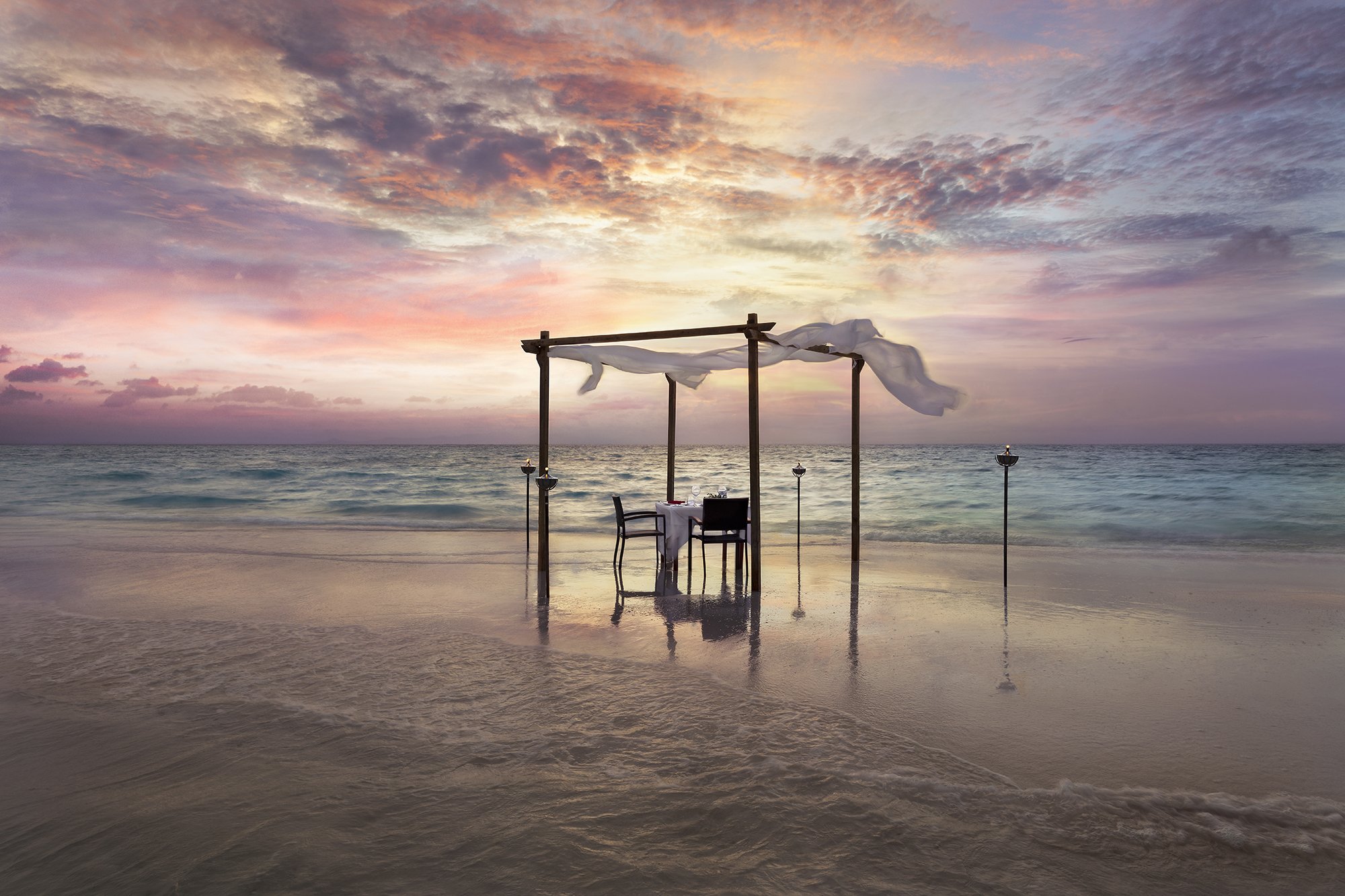
Nine times out of ten, the image that carries the most emotional weight from any production is not the hero suite shot or the carefully styled restaurant composition. It is the image made at sunrise or sunset. The moment when the world hasn't fully woken yet. When the property is still and the light arrives slowly, warming stone, catching water, moving across a bed of white linen as if it belongs there.
In those moments something shifts. The space stops being a space and starts being a feeling.
And then, sometimes planned and sometimes not, a human being enters the frame. Not posing. Not performing. Simply present. A member of staff placing a single orchid on a table in an empty restaurant, their attention so complete they have forgotten the camera exists. A guest sitting alone by a window with a book open in their lap and the city moving silently behind the glass. A pair of hands wrapped around a cup of tea on a terrace as the river catches the first gold of the morning.
These are the moments that stop people. Not because they are spectacular but because they are true. Because the viewer recognises something in them. A quality of stillness they are searching for. A sense of being completely present in a place, unburdened, unhurried. The particular silence of a beautiful room when no one is asking anything of you.
That is what the best hotel photography captures. Not the property. Not even the experience. But the breath you take when you finally arrive somewhere that lets you exhale.
Those images work because they don't ask the viewer to imagine being there. They make the viewer feel they already are, already still, already at ease, already home.
What Luxury Actually Feels Like
Luxury, real luxury, the kind that justifies the rate and earns the loyalty, is not complicated. It is the absence of friction. Ease of movement through a space. The feeling that everything has been considered so that you don't have to think about any of it. No one watching you. No performance required. Just the quiet confidence of being somewhere that was designed, at every level, for your comfort and your pleasure.
Through a lens, that feeling translates the same way. The images that communicate genuine luxury are not the ones where everything is perfect in an obvious, staged way. They are the ones where the light falls naturally, where the space breathes, where there is enough stillness in the frame for the viewer to place themselves inside it. Luxury through a lens is space. It is restraint. It is the feeling that nothing in the frame is trying too hard, because the property itself doesn't need to.
The Image Worth Waiting For
There is a specific kind of patience that this work requires and that no brief can teach. It is the patience to arrive before the light. To walk a space at the hour when the sun does something to the stone or the water or the teak that it will never do again in quite the same way. To set the frame, wait, and be ready for the moment that either comes or doesn't.
Sometimes that moment is the one you planned. The golden hour capture of a pool terrace that you scouted two days earlier and knew, if the sky cooperated, would be something worth making. Sometimes it is the moment nobody planned. The unguarded human moment in a perfectly considered space that no amount of direction could have produced.
Those images cannot be briefed. They can only be recognised and made by someone who is paying attention.
That is what thirteen years of this work comes down to. Not equipment. Not technique. Not even light, really. Attention. And the willingness to wait for the moment that makes a stranger feel, before they have ever arrived, that they are already home.
Sven Ellsworth is the Founder and Creative Director of Ellsworth/Lim, a luxury hospitality and architectural photography studio based in Bangkok, operating globally. The studio has created visual assets for Four Seasons Hotels & Resorts, Kempinski, Grand Hyatt, The Sukhothai Bangkok, The Siam, Giorgio Armani, Yves Saint Laurent, Brunello Cucinelli, and numerous independent luxury properties globally.
When Brand Guidelines and Client Preferences Collide. The Photographer's Role as Consultant.
Every photographer working in luxury hospitality has been in this room. The brand guidelines say one thing. The person signing the purchase order says another. What happens next defines the quality of everything that follows.
The Tension is Real and it is Common
Luxury hotel brands invest significantly in their visual identity standards. Global brand teams develop guidelines that govern colour temperature, composition, light treatment and the ratio of lifestyle to architectural content. Those guidelines exist to protect consistency across dozens of properties in multiple markets.
The problem arises at the property level. A general manager has strong opinions about how their hotel should look. A marketing manager has their own aesthetic preferences. A regional director wants something that performs on social media this quarter. None of these people are wrong to have opinions. But when those opinions conflict with brand guidelines, the photographer standing in the middle has a choice to make.
Executing a brief that violates brand guidelines is not delivering what the client wants. It is delivering what one person in the client organisation wants, at the expense of everyone else.
What the Photographer's Role Actually is
A photographer working at the luxury hospitality level is not simply a technician who executes instructions. They are a visual consultant who brings expertise and judgment about how imagery performs across channels, markets and brand systems. When brand guidelines and client preferences diverge, the photographer's job is not to choose a side. It is to understand why the divergence exists, communicate what is at stake in each direction and help the client make an informed decision rather than an instinctive one.
Where Brand Guidelines are Right
Brand guidelines codify the collective understanding of how a brand should be perceived globally. A client who wants warmer colour grading because it looks better on their Instagram feed may be right about their Instagram feed. They are probably wrong about the long-term value of their visual asset library. A client who wants lifestyle photography in every room shot may be right about aspiration. They are almost certainly wrong about OTA conversion, where guests need clear, accurate information to book. The photographer who executes those preferences without raising these considerations is not serving the client. They are accommodating them.
Where Brand Guidelines are Wrong
Guidelines are written at a point in time and cannot anticipate every property or market. A boutique property within a larger group may have a character so distinct that applying standard visual guidelines produces imagery that feels generic. In these cases the photographer's role is to help the client articulate why the guidelines feel wrong for this specific context and escalate it to the brand team as a legitimate creative conversation rather than a unilateral departure.
The photographer who has spent three days in a property often understands its visual potential better than the brand team who wrote the guidelines from a head office. That understanding is only useful if it is communicated constructively.
The Conversation that Needs to Happen Before the Shoot
Most conflicts between brand guidelines and client preferences are predictable and resolvable before production begins. At Ellsworth/Lim, the brief review process always includes a direct conversation about brand guidelines. We ask to see them. If we identify a conflict between what the client has briefed and what the guidelines require, we raise it before the shoot rather than on set. That conversation is sometimes uncomfortable. It is always less uncomfortable than producing a visual asset library the brand team rejects and the client has to reshoot at their own cost.
What Good Looks Like
The best outcomes happen when the photographer, the property team and the brand team are aligned before production begins. When that alignment exists, guidelines become a framework for excellence rather than a constraint on creativity. The property gets imagery that is both on-brand and specific to its character. The guest gets visual communication that accurately represents what they will experience on arrival. That outcome requires the right conversation at the right moment. The photographer who initiates that conversation is worth considerably more than one who simply picks up the camera and shoots.
Cinematic is not a Photography Style. It is a Strategic Tool. Many Hotels are Using it the Wrong Way.
Cinematic has become the most overused and least understood word in luxury hospitality photography. It is a distinction worth making clearly.
What Cinematic Actually Means
Cinematic is a specific visual language borrowed from film. It is characterised by intentional mood, compressed depth of field, dramatic light ratios, motion and atmosphere. It is designed to create an emotional state in the viewer rather than communicate factual information about a subject. Used correctly, it is one of the most powerful tools available in visual storytelling. Used incorrectly, it is expensive, misleading and damaging to the brand it is meant to serve.
In film, cinematic techniques work because the viewer understands the contract. They are watching a story. Atmosphere, ambiguity and mood serve the narrative. In hospitality photography, the contract is completely different. A guest researching a hotel is not watching a story. They are making a decision. They need to understand what a room looks like, how a space feels, what the scale of a pool is, how light enters a lobby. Cinematic techniques applied to that context do not elevate the photography. They obscure the information the guest needs.
A beautifully moody photograph of a guest room that conceals the size of the bathroom is not cinematic. It is a liability.
Where Cinematic Belongs
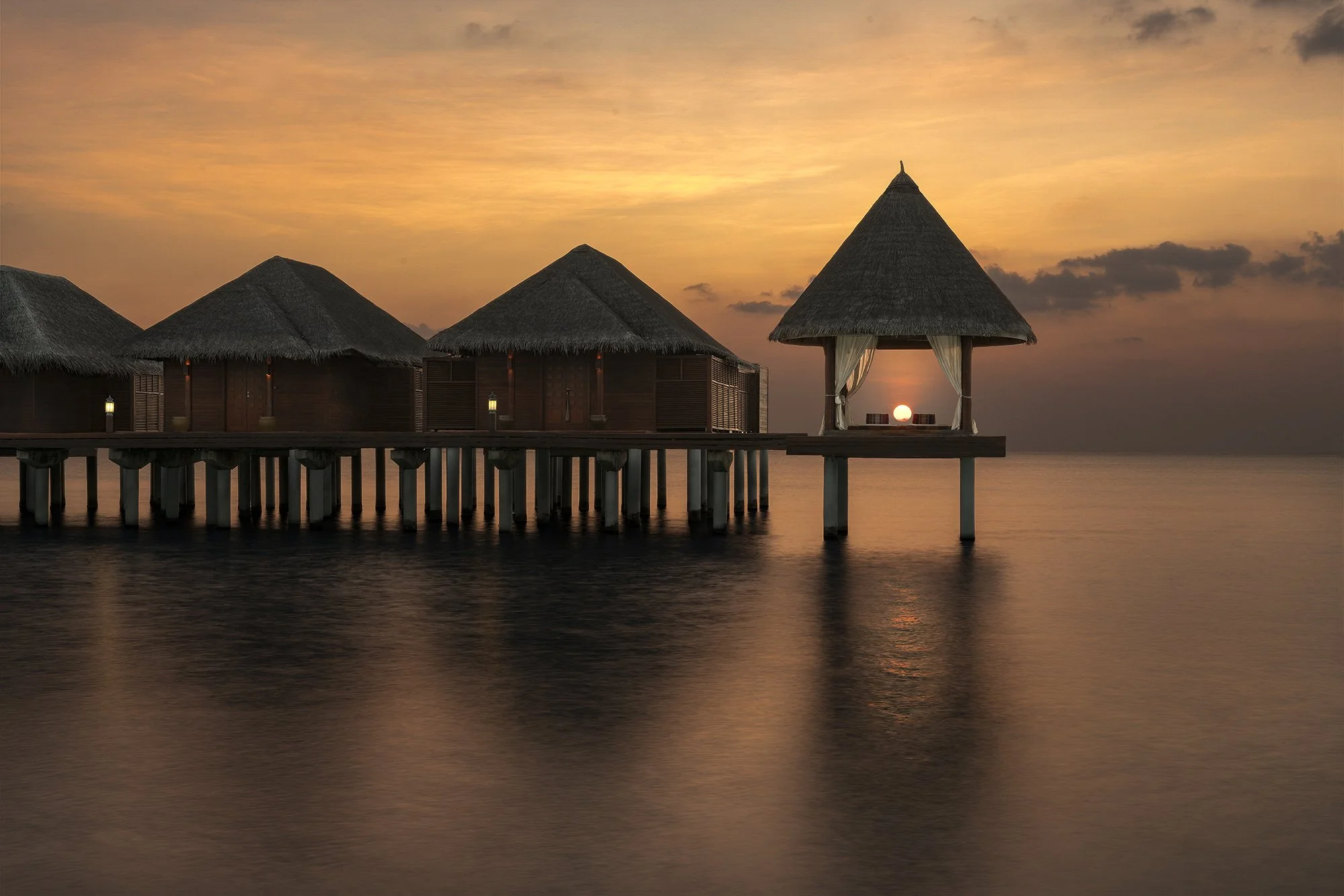
Cinematic visual language has a precise and valuable role in hospitality photography. That role is lifestyle and mood content. A film sequence of a guest arriving at the property, the atmosphere of a spa at dawn, the feeling of a private pool villa at golden hour, the energy of a restaurant coming alive at dinner service. These are moments where emotion is the message and cinematic technique serves it perfectly. The viewer is not looking for dimensions. They are looking for desire. Cinematic delivers desire.
The distinction is not subtle. It is structural. Architectural and product photography — rooms, suites, bathrooms, dining spaces, lobby, pool, exterior — exist to communicate specific, accurate information about a physical environment. That information needs to be precise, well-lit, geometrically honest and faithful to the actual experience of being in the space. Applying cinematic treatment to those images does not make them more luxurious. It makes them less useful and, in many cases, less honest.
Why this Matters Commercially
When a hotel briefs a photographer to make everything cinematic, what they are actually asking for is mood at the expense of information. The result is a visual asset library that looks impressive in a presentation and underperforms in every channel where guests actually make booking decisions. OTA platforms, Google, direct booking engines and social media all reward imagery that communicates clearly and accurately. Guests who book based on cinematic imagery and arrive to find a property that does not match what they imagined do not leave good reviews. They leave disappointed ones.
The most successful luxury hospitality brands understand this distinction instinctively. Their architectural and product photography is precise, accurate and beautifully produced. Their lifestyle and campaign content uses cinematic technique to create aspiration and emotional connection. The two exist in deliberate balance, each serving a different audience need at a different point in the guest journey. Confusing the two does not create a more luxurious visual identity. It creates an inconsistent one.
Cinematic is not a quality setting you apply to every image. It is a specific tool for a specific job.
What to ask Instead
The next time a brief arrives with cinematic as the primary direction, the most useful question is: cinematic for what purpose and for which channel? If the answer is lifestyle film, brand campaign or social mood content, cinematic is exactly the right tool. If the answer is room photography, F&B imagery or website product shots, it is the wrong one. The brief should specify both. A photography studio that does not ask that question, and a client that does not know the answer, will produce a visual asset library that looks beautiful, performs poorly and costs significantly more than it should have.
At Ellsworth/Lim, we apply cinematic technique deliberately and specifically, never as a default. It is one tool among many, and like every tool its value depends entirely on whether it is being used for the right job.
Why Your Photography Brief is the Most Expensive Document You Never Write
After 13 years and hundreds of luxury hospitality commissions, one of the most consistent reasons a photography project does not reach its full potential is not budget, timing, or creative disagreement. More often, it is the absence of a properly developed brief.
Not because clients do not care. Hotel teams are balancing owners, operators, brand standards, pre opening timelines, sales requirements, guest experience, marketing deadlines, and the daily realities of running a property. Photography is important, but it is often happening inside a much larger and more demanding process.
That is precisely why the brief matters. It creates clarity before production begins and gives everyone involved a shared understanding of what the photography needs to achieve.
What We Often See in Practice
In hospitality, photography briefs often take shape gradually. What begins as an initial room list may later be joined by a mood board, reference images, updated priorities, and an email thread that reflects how the project has evolved. By the time production approaches, the brief may contain useful information, but not always a clear picture of what the photography needs to achieve.
This is understandable. Hotel projects are complex. Openings move quickly, priorities shift, stakeholders change, and spaces may still be coming together while marketing teams are being asked to make decisions about launch imagery, sales assets, public relations, and brand communications. The challenge is rarely a lack of care. More often, it is that the brief has not had the time, ownership, or structure it needs to become a true creative and strategic foundation.
An experienced photographer can often respond to what is happening on the day, but responding in the moment is not the same as preparing with intention. The difference is not always visible in the technical quality of the images. It is visible in whether the photography clearly communicates what the brand needs guests, owners, and brand audiences to understand.
The Brief is Not a Logistics Document
The most common misunderstanding is that a photography brief is simply an operational document: a list of spaces, a schedule, a contact name. Those things matter, but they are only part of the process. A strong brief answers a far more important question: what do these images need to make someone feel, decide, or believe?
A complete brief helps define how the property wants to be positioned in the market, who the primary guest is, what their decision making journey looks like, where the images will appear, what the brand's visual standards require, and what makes this property genuinely different from every competitor in its category.
Without that information, a photographer can still produce beautiful images. What becomes much harder is producing the right images. The solution is not necessarily a longer document. It is a clearer one. A useful brief connects the practical requirements of the shoot with the strategic purpose of the imagery, so every creative decision has a reason behind it.
When the Scope Keeps Evolving
Hospitality projects are rarely static. Spaces evolve, priorities shift, and new opportunities often appear as a property comes closer to opening or repositioning. In many cases, those changes are not problems at all. They are part of the natural rhythm of bringing a hotel or resort to life.
The challenge is that without a clear brief, every new request can begin to compete with every other priority. Time, attention, styling, access, and creative focus all need to be managed carefully. When the purpose of the imagery is not clearly defined, it becomes harder to know what should be protected, what can be adjusted, and how each change affects the larger story.
This is where a strong brief becomes valuable. It does not remove the need for flexibility. It makes flexibility easier. When everyone understands what the photography needs to achieve, new ideas can be considered thoughtfully rather than reactively. A newly completed suite, a restaurant that suddenly becomes available, or a guest experience that deserves more attention can all be integrated in a way that supports the overall visual narrative.
When the Unexpected Changes the Plan
Even with the best preparation, hospitality productions can change without warning. Weather turns, access shifts, a space is not ready, a guest area becomes unavailable, or an unexpected incident changes what can be photographed that day. These moments are not failures of planning. They are part of working in living, operating properties.
A strong brief gives the team something to return to when Plan A is no longer possible. If the original schedule needs to change, the brief helps everyone understand what still matters most. It allows the photographer, marketing team, and property team to make quick decisions without losing the purpose of the shoot.
Plan B is not simply about finding another room to photograph. It is about protecting the story. When the brief is clear, the production can adapt while still creating images that serve the brand, support the guest journey, and remain aligned with the larger visual strategy.
What a Real Brief Contains
A complete photography brief for a luxury hospitality property covers brand positioning and competitive context, the primary and secondary audiences for the imagery, the full list of spaces and experiences to be documented, and the channel requirements for every deliverable, including website, OTA, social media, public relations, and sales collateral.
It should also include the brand's visual standards, any mandatory guidelines, the timeline from shoot to final delivery, and the single most important thing the imagery needs to communicate about the property that no competitor can claim.
That last item is often the most valuable. It is also the one most likely to be missed when everyone is moving quickly. Yet it is what separates photography that performs from photography that simply documents.
The Brief is Where Our Work Begins
At Ellsworth/Lim, the brief is not something we receive and simply execute. It is something we develop together. Before a shoot schedule is built, before a lighting plan is drawn, and before a single frame is considered, we work with brand teams, marketing directors, and operators to understand what the photography needs to achieve commercially, editorially, and strategically.
That conversation is not preliminary. It is part of the work. Everything that happens on set is shaped by how clearly the brief has been developed before we arrive.
When the brief is properly developed, the photography has direction, the team has alignment, and the production has the flexibility to respond when circumstances change. The final images do more than document the property. They preserve the intent behind the design, the atmosphere of the guest experience, and the story the brand needs to tell long after the shoot is over.